
30 May May 2026 Food Security Coalition Meeting Recap
May 29, 2026 Food Security Coalition Convening Notes
Food Security Survey presentation by Lauren Kraemer: The 2025 Columbia Gorge Food Security and Food Access Survey collected responses from more than 1,300 residents across Hood River, Wasco, Sherman, Skamania, and Klickitat counties to assess food access, food security, and community needs.

About the Survey:
This assessment was designed to better understand the experiences of community members who face food access and food security challenges. The survey was not intended to be statistically representative of the broader Columbia Gorge population, and findings should not be interpreted as population-wide estimates. Survey recruitment intentionally prioritized individuals and households that may be more likely to experience food insecurity in order to better understand the depth, complexity, and drivers of food access challenges across the region. As a result, the findings reflect the experiences and perspectives of residents most affected by food insecurity and barriers to food access. Please email Lauren before sharing this information: Lauren.Kraemer(at)oregonstate.edu.
A final report will be published and available for widespread distribution in the fall of 2026.
Key Preliminary Findings:
- High food costs were the most frequently cited barrier to buying enough food, with respondents consistently identifying rising grocery prices and the cost of healthy foods as major concerns.
- Food insecurity affects a substantial portion of the region.
- 49% of respondents reported worrying that food would run out before they had money to buy more.
- 42% reported that food purchased did not last and they lacked resources to purchase additional food.
- This is a significant increase from 2015, when 30% of respondents reported food insecurity.
- Geographic and transportation barriers continue to impact food access.
- Nearly 40% of respondents reported spending more than one hour per week traveling to obtain food.
- Residents in more isolated communities frequently reported limited local food options and higher prices.
- Food assistance programs remain critical community resources.
- SNAP, WIC, school meal programs, and local food pantries were among the most recognized and utilized programs.
- Hundreds of households reported relying on food pantries and SNAP benefits to supplement their food needs.
- Freshness, nutrition, and affordability drive food choices.
- Respondents across all demographics and income levels ranked fresh food, nutritious food, and budget-friendly options as their top priorities when selecting food.
- Winter is the most challenging season for food access.
- Respondents cited weather conditions, transportation difficulties, seasonal employment fluctuations, and increased household expenses as contributing factors.
Community Priorities:
Respondents expressed strong interest in resources that could improve household food security and self-sufficiency, including:
- Food preservation and storage techniques
- Cooking and nutrition education
- Home gardening and food production
- Budget-friendly shopping strategies
- Access to affordable meals and food resources
Data collection occurred between May and October 2025. Notably, this period preceded the implementation of several significant changes to the Supplemental Nutrition Assistance Program (SNAP), including those associated with H.R. 1. Consequently, despite the recency of the assessment, the findings may already be outdated. In this context, the data likely underrepresent current levels of food insecurity, as reductions in benefits and eligibility are expected to increase barriers to food access for many households.
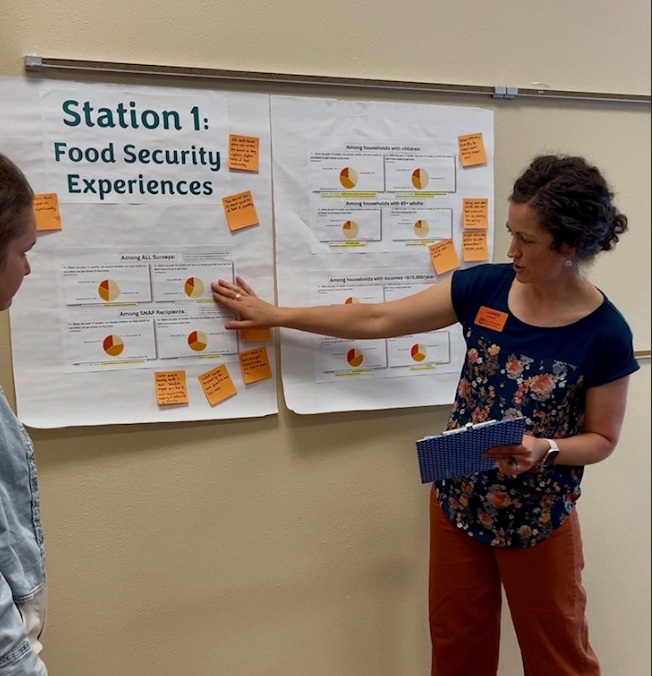
Participants then did a “data walk” and shared comments, questions, and insights on the survey results.
The Food Security Coalition is seeking additional steering committee members to dig deeper into how we can address the growing hunger in our region. If you have any interest in joining our small but mighty group, please consider filling out this online application.
Next meeting will be the fall of 2026 with a focus on emergency preparedness as it relates to food.
Learn more about the Food Security Coalition here and sign up for the newsletter to receive an invitation to future meetings: https://gorgegrown.com/foodsecurity/